Wintering: Pause and Light

Updated: Dec 21, 2025
The Winter Solstice arrives like an exhale. The longest night of the year, the moment when the earth tilts furthest from the sun, and everything pauses. Not in panic, but in recognition. The world has been spinning fast, and here, finally, is permission to stop.
This feels especially necessary now, doesn't it? In the thick of holiday chaos, the endless to-do lists, the pressure to perform joy on cue, the solstice offers something different. While the world around us speeds up, the earth itself slows down. It's a quiet reminder that rest isn't something we earn after we've finished everything. It's part of the cycle itself.
For centuries, cultures across the globe have understood this moment not as something to endure, but as something to honor. The darkness isn't an enemy. It's an invitation.
In Denmark, they call it hygge. You've probably heard the word by now, seen it on candles and throw pillows, but the practice runs deeper than aesthetics. Hygge is the art of creating warmth in the absence of light. It's the flicker of candles on a winter afternoon, wool socks and shared blankets, the slowness of tea steeped just right. It's presence and intentionally slowing down to be in the moment, rather than rushing to the next task. In the depths of Scandinavian winter, when daylight barely grazes the horizon, hygge is about taking time to relax and enjoy life's quieter pleasures.
Travel north to Norway, and the concept shifts slightly. Koselig carries the same warmth, but with an embrace of the outdoors. Here, coziness isn't confined indoors. Norwegians bundle up and step into the cold, gathering around bonfires under star-scattered skies, returning home with flushed cheeks and the kind of tiredness that feels earned. It’s about adapting and celebrating what winter is, instead of longing for all the things it isn’t. Similar to hygge, koselig is a feeling: that of coziness, intimacy, warmth, happiness, being content. A state of mind and being.
In the UK, the solstice has long been marked by fire. The Yule log, that ancient tradition of burning wood through the longest night, was never just about heat. It was about light as a promise. The flames held space for the sun's return, a quiet insistence that even in the deepest dark, the light is already on its way back. Wassailing, too, that old custom of singing to trees and toasting the earth, was a way of saying: we see you, we're still here, we're waiting together.
Across the ocean and over mountains, in Japan, winter gatherings take a different shape. Families huddle around the kotatsu, a low table warmed from beneath, legs tucked under a shared blanket. There's tea. Mandarins. Conversation that doesn't need to go anywhere. The kotatsu isn't about productivity or even entertainment. It's about being together in stillness, letting the warmth seep in, letting time move at its own pace. In a culture that honors both precision and pause, winter becomes an excuse to practice the latter.
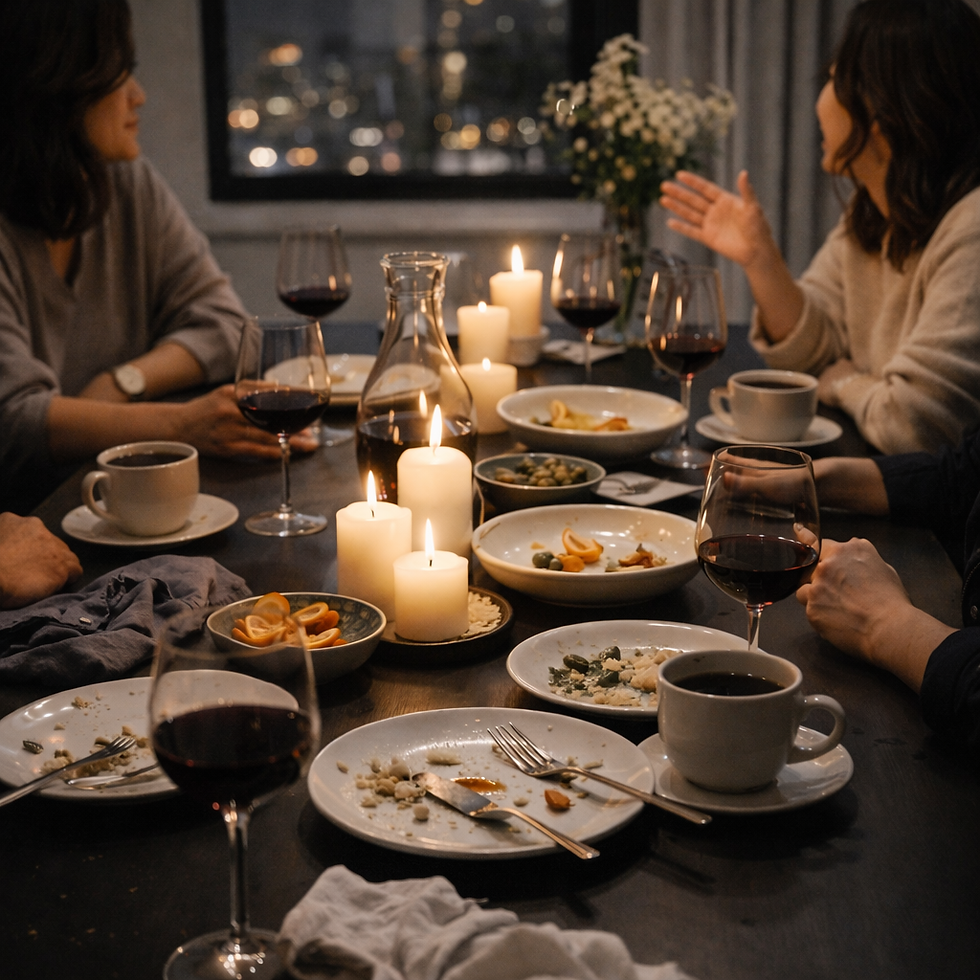
And in Latin America, where winter might not bring snow but still ushers in cooler, shorter days, the ritual of sobremesa takes center stage. The meal ends, but no one moves. The table becomes a place to linger, to talk, to let the evening unfold without rushing toward the next thing. It's not about the food anymore. It's about the space between. The kind of presence that can only happen when no one is checking the time.
What ties these traditions together isn't geography or climate. It's the understanding that winter, with all its darkness and cold, offers something rare: a reason to slow down. To light a candle and watch it flicker. To sit closer. To breathe deeper. To let the world spin without you for a moment.
The Winter Solstice reminds us that pause isn't laziness. It's preparation. The earth rests so it can bloom again. And maybe, if we let ourselves honor that same rhythm, we can too.
So as the longest night settles in, consider this: What does your pause look like? How do you hold space for the light to return? How do you honor the pause when the world goes dark?

Wintering—snowshoeing frozen Lake Louise. 



Comments